Representing Black Music Culture Then Now and When Again
Nat Male monarch Cole. Ella Fitzgerald. Chuck Berry. Aretha Franklin. Kendrick Lamar.
When it comes to agreement the power of black artists in the American musical landscape, there is certainly no shortage of icons from which to cull. In fact, it is impossible to discuss the history of American music without examining the origins and affect of black music. For consumers of music today, the overarching influence of black music is palpable in every chord and lyric.
"You cannot imagine American music without its African influences. It just doesn't exist," said Benjamin Harbert, an assistant professor of music in the Department of Performing Arts.
Blackness music adds a layer of variety to the American identity and constantly responds to the black American experience. The daily struggles, triumphs, hopes and failures of generations of black Americans are carefully and methodically recorded not only in the pages of history textbooks but also by the music and lyrics of the era.
Spirituals
Advertizement:

When slaves were brought to America, their music and culture came with them. Slave owners forced their slaves to convert to Christianity, and, out of this blending of European Christianity and African music tradition, the Negro spiritual was built-in.
Spirituals not only served equally an expression of sorrow only as well as a code to orchestrate escapes and rebellions. Music was not just a luxury to be enjoyed in free time but besides a necessity to spiritual and physical survival. Although the commercial popularity of the spiritual died downwardly after the Civil War, they experienced a resurgence during the Civil Rights Movements. In conjunction with gospel music, spirituals were used to express the oppression that still plagued blacks 100 years after emancipation. Often, music historians consider Negro spirituals to exist folk music, which, by nature, must tell a story — a clear legacy of African oral tradition.
An case of this continuation is the work of early-20th century composer Will Marion Cook, a native Washingtonian who trained as a concert violinist and studied under Antonín Dvořák. Cook later equanimous musicals that included elements from African-American folk.
Blues
In the early 1920s, blues music began to flourish with the influence of work songs, spirituals and African music. In the harsh South along the Mississippi River under the regime of Jim Crow, blues offered the blackness customs escape from the harsh reality of fierce racism.
Dejection music was dynamic and diverse, following no strict doctrine and using readily available instruments, sometimes fifty-fifty ones made at home. This trait made blues accessible to all people regardless of their socio-economical status or race. At a time when black people were non given seats at the table of American culture, they created their own, one that was diverse and eventually dictated music culture for the next several decades.
Jazz
Perhaps the most well-known American musical consign, jazz was born from a fusion of musical styles in New Orleans, where Africans, white Europeans and French-speaking Creoles coexisted.
Segregation laws passed in 1894 divided night-skinned Creoles from their lighter-skinned kin, which gave blackness Creole musicians
more than incentive to associate with English-speaking blacks, resulting in a mixing of their musical traditions. Shortly, jazz was brought past black workers on riverboats to places like Missouri and Kansas, and took off in the nightclubs of southern Chicago.
"It is happy-go-lucky, only at the same fourth dimension very serious tones of a people who were fighting to be heard and fighting against some forms of oppression," said Maurice Jackson, a professor in the department of history and African American studies.
Musically, jazz is known for its improvisation and experimentation.
"There's an one-time saying: You tin never step in the same river twice," said Jackson, referring to the idea that a jazz song is played differently every time, and no ii performances are exactly alike.
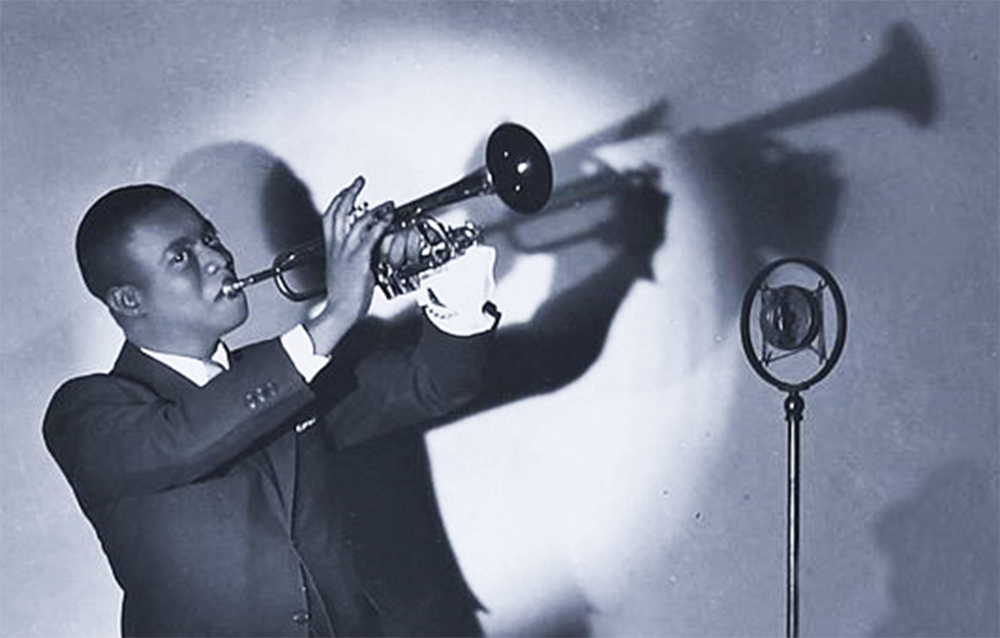
Jazz is a dynamic genre that welcomes new influences and has a broad variety of styles and forms, such as the easily danceable swing, frantic and highly improvisational bebop associated with Charlie Parker, and experimental, chaotic free jazz of Ornette Coleman. Just every bit jazz musicians incorporated other forms of music into jazz — Miles Davis and Herbie Hancock'due south renowned infusions of soul and funk, for instance — jazz in plow influences modern albums like Kendrick Lamar's "To Pimp a Butterfly." The wordless improvisational scatting of jazz singers similar Louis Armstrong and Ella Fitzgerald have also inspired modern music.
"Some people say information technology is the origin of hip-hop," said Jackson of scatting.
The impact of jazz has reached across just music. Bebop creative person Light-headed Gillespie'due south beret and goatee became trademarks of black
countercultural fashion, and celebrated figures such every bit Armstrong became the faces of black America in their heyday.
"In 1957, during the Little Rock Cold-shoulder, Eisenhower tried to get [Armstrong] to go to Russia to say, 'What you've seen on TV is not true. We don't beat our blackness people,'" Jackson said.
Musicians besides addressed social issues through their work. Costless jazz's avant-garde nature was seen by some equally revolutionary social critique, while artists from Max Roach to Billie Holiday released overtly political works including the sometime'southward album, "Nosotros Insist! Freedom At present," and the latter'due south famously haunting vocal, "Strange Fruit."
Rock 'N' Roll
Although many would consider rock music to be a largely white genre, many of its origins lie in the blackness customs.
"Part of the exuberance that you hear in early stone 'n' roll is tied to the migration of lots of African Americans as part of the state of war try to cities and various parts of the country, excited near participating in this industrial boom that America was witnessing," Harbert said.
Rock 'due north' curlicue evolved most straight from the rhythm and blues of the 1940s and '50s, both of which the record manufacture categorized equally "race music" at the time. Although the starting time rock music was created with a black audience in mind, white teenagers presently defenseless wind through radio broadcasts and were drawn to its rougher sound and edgier themes.
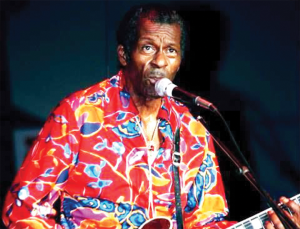
Rock 'northward' roll shortly became a mainstream cultural miracle, with artists like Little Richard, Fats Domino and Chuck Berry gaining widespread play and popularity. The experiences of the late Chuck Drupe, who passed away last weekend, reverberate the complicated racial situation of America at the time.
"From the beginning of his career, he played to both white and black audiences," Harbert said. "He writes almost this in his autobiographical writings, about how hard it was to play to both crowds … He tried, through music, to overcome racial divisions between audiences, just, in playing stone 'due north' roll, he never let go of his roots."
Every bit rock 'n' coil continued to abound in popularity amid white audiences, the genre was rebranded by tape labels as a white genre, and the relative presence of black artists diminished, with the exceptions of artists like Jimi Hendrix and Prince. Rock was the ascendant genre of the mid-to-tardily-20th century and spearheaded a massive cultural motion that persists today — it is difficult to overstate the significance of its black origins and contributors.
Hip-Hop
For many young Americans today, the first affair that comes to listen when "black culture" is mentioned is hip-hop. The term "hip-hop" itself refers to more just rap music; it encompasses a larger movement stemming from the urban blackness experience, including elements of expression such as deejaying, graffiti and breakdancing. Born in the black communities of 1970s New York Metropolis, hip-hop was heavily influenced by Caribbean area immigrants who brought practices like "toasting," or rhythmic vocal addresses, to crowds and the utilize of mobile DJ units to the neighborhood.
Competition has always been a dominant theme in hip-hop, and parties often had multiple DJs competing through volume and song selection. DJs too oft hired MCs, or "masters of ceremony," who spoke to hype up the oversupply. Rap bankrupt through to the mainstream with the 1979 hitting record "Rapper's Delight" by The Sugarhill Gang, and hip-hop before long became an unstoppable forcefulness in modern music. Run-DMC's 1984 eponymous anthology was the kickoff to sell 500,000 copies, heralding the authority of rap in the '90s and 2000s.
Musically, hip-hop'south defining feature is the use of electronic drums, synthesizers and looped samples from other media to produce unique bankroll tracks for rappers. In these beats, information technology is common to hear fragments of soul, R&B and funk songs from previous decades, and then listeners can trace a straight lineage from the sounds of the past to the songs of today. For instance, Nina Simone'southward 1968 vocal "Do What You Gotta Do" is sampled in "Famous" from Kanye Due west's 2016 album "The Life of Pablo."
Hip-hop continues to take a huge influence on American culture, which can exist clearly seen through way trends such equally oversized athletic jerseys, gilded molar grills and bucket hats. Lyrically, rap has always been controversial, with ubiquitous profanity and frequent themes of violence, drugs and misogyny.
Still, it has also served equally a vehicle for black empowerment and social commentary, through songs like Tupac's "White Homo'z World" or Kendrick Lamar's "The Blacker the Berry." Hip-hop is the culmination of urban black culture, and it shows picayune sign of decreasing in popularity or importance.
Black Pop Music
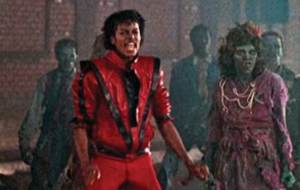
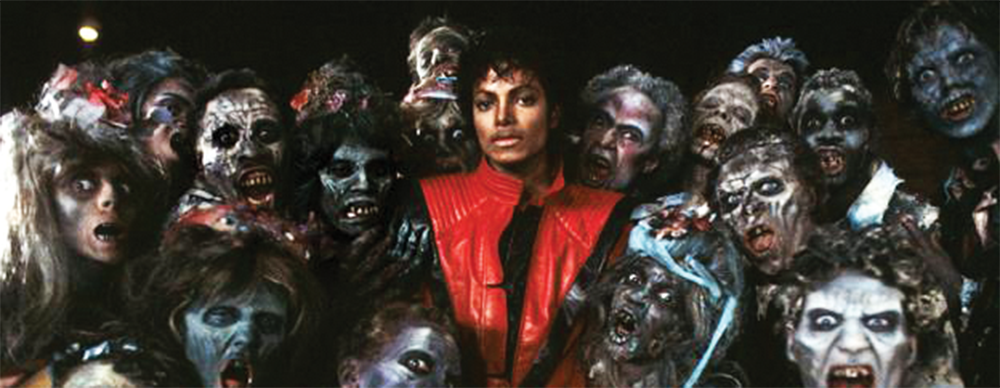
Modern pop stars of all races would not be in their current forms without black music. In nearly every genre of pop music, blackness musicians accept had a significant impact. Pop stars similar Michael Jackson, Prince, Mariah Carey and Whitney Houston all stand for the most recent infusion of black music into the American mainstream. Jackson'due south "Thriller" catapulted black musicians to the forefront of the world, with 29 meg albums sold.
This widespread appeal represented the irresolute views of Americans in regards to race — Jackson's popularity could overcome the racial prejudice that had characterized America for hundreds of years. Into the 21st century, hip-hop and rap became integral parts of the American pop identity.
Blackness music adds more nuance to the way that America is perceived globally. Hip-hop music has contradistinct the kind of pop music to which Americans heed, adding significant amounts of drums, bass and sampling. The black influence did not end in America, and has spread effectually the globe with rap and hip-hop scenes developing all around the earth.
"Pretty much every style of music had some sort of mixing and separation. The history of the United States is based off of this process, of bringing together and then separating," Harbert said.
Although black Americans today still face up racial inequalities and prejudice in their lives, in forms both old and new, in that location remains a unifying thread that can be felt in aspects of music and civilisation — a determination to be heard.
cordovateuttlying.blogspot.com
Source: https://thehoya.com/songs-of-struggle-and-spirit/
0 Response to "Representing Black Music Culture Then Now and When Again"
Publicar un comentario